


Unfiltered Nanofat and Combination Nanofat Therapies for Facial Scar Improvement
Can Adipose-Derived Regenerative Therapies Change the Way We Treat Facial Scars?
Introduction
Facial scars remain one of the most challenging aesthetic and reconstructive concerns encountered in clinical practice. While scars represent the natural endpoint of wound healing, they frequently result in cosmetic deformity, psychological distress, and diminished quality of life—particularly when located in highly visible facial regions.
Traditional treatment modalities, including scar revision surgery, subcision, laser resurfacing, dermabrasion, corticosteroid injections, chemical peels, and fillers, often provide variable results and may require multiple treatment sessions. As regenerative medicine continues to evolve, clinicians are increasingly exploring biologically active therapies capable of promoting true tissue remodeling rather than merely camouflaging scar defects.
A recently published case series by Alnemr et al. (2024) evaluated the use of nanofat grafting—with and without injectable platelet-rich fibrin (i-PRF)—for the treatment of atrophic facial scars. Although limited in size, the study offers valuable insight into the growing role of adipose-derived regenerative therapies in facial scar management.
Why Are Atrophic Facial Scars Difficult to Treat?
Atrophic scars are characterized by dermal volume loss, tissue tethering, collagen disorganization, and impaired skin architecture. Unlike hypertrophic scars, which involve excessive collagen deposition, atrophic scars represent a deficiency of healthy tissue and structural support.
Successful treatment therefore requires more than simple volume replacement. Ideally, therapy should:
Restore dermal thickness
Stimulate neovascularization
Promote collagen remodeling
Improve skin texture and elasticity
Reduce pigmentary irregularities
Release fibrotic adhesions
This regenerative challenge has led clinicians to investigate the biological potential of adipose-derived stem cells (ADSCs) and stromal vascular fraction components found within fat grafts.
What Exactly Is Nanofat?
Nanofat is a mechanically emulsified and filtered form of autologous adipose tissue first described by Tonnard and colleagues.
Unlike traditional fat grafts, nanofat contains minimal intact adipocytes but remains rich in:
Adipose-derived stem cells (ADSCs)
Stromal vascular fraction cells
Growth factors
Bioactive cytokines
Regenerative cellular components
The resulting product can be injected through very fine needles into superficial facial tissues where conventional fat grafts may be impractical.
Importantly, nanofat functions less as a volumizing filler and more as a regenerative biologic capable of influencing tissue repair and remodeling.
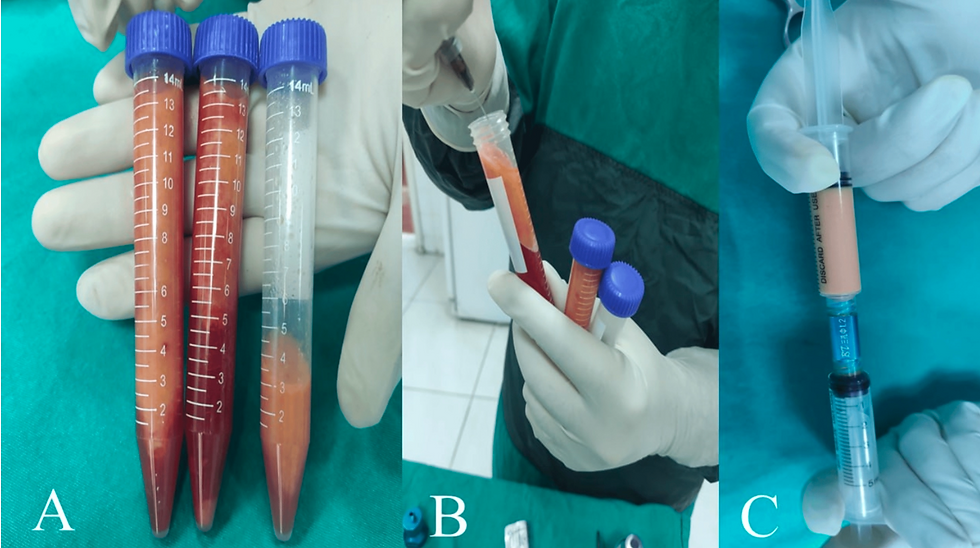
The Study: Evaluating Nanofat for Facial Scar Improvement
Alnemr and colleagues presented four patients with long-standing atrophic facial scars resulting from trauma and reconstructive procedures.
Patient Characteristics
The scars included:
Post-traumatic facial scars
Upper lip scars
Scars following severe facial injuries
Long-standing atrophic deformities ranging from 6–10 years in duration
Patients underwent treatment with either:
Conventional nanofat grafting
Unfiltered nanofat combined with injectable platelet-rich fibrin (i-PRF)
All patients were followed for six months after treatment.
Key Findings
Across all four cases, investigators observed:
Outcome Category | Clinical Findings |
Improvement in Scar Appearance | • Reduced scar depression depth• Improved facial contour and tissue volume restoration• Better color integration with surrounding skin• Enhanced skin texture and overall scar quality |
Patient & Physician Satisfaction | • High levels of patient satisfaction reported following treatment• Physician assessments demonstrated favorable cosmetic improvement and scar remodeling outcomes |
Safety Profile | • No significant treatment-related complications observed• No persistent pain reported during follow-up• No chronic inflammation at treatment sites• No itching or discomfort associated with the treated scars• No major donor-site morbidity following fat harvesting• No injection-related adverse events documented |
Key Takeaway: Across all four cases, nanofat grafting—particularly when combined with injectable platelet-rich fibrin (i-PRF)—was associated with visible aesthetic improvement, high satisfaction among both patients and clinicians, and an excellent safety profile over the six-month follow-up period.
Why Might Unfiltered Nanofat Be Superior? One of the most interesting aspects of the study was the use of unfiltered nanofat.
Traditional nanofat preparation includes a final filtration step designed to facilitate injection through very fine needles.
However, emerging evidence suggests that eliminating this filtration stage may preserve:
Greater cellular density
More stromal vascular fraction components
Higher concentrations of ADSCs
Increased regenerative signaling molecules
The authors hypothesize that these additional cellular elements may enhance tissue regeneration and scar remodeling.
The Synergistic Role of Injectable PRF
The strongest cosmetic outcomes were observed when nanofat was combined with injectable platelet-rich fibrin (i-PRF).
PRF differs from traditional platelet-rich plasma (PRP) in several important ways:
Simpler preparation
No anticoagulants required
Higher fibrin matrix formation
Sustained release of growth factors
Enhanced cellular scaffolding
Growth factors released by PRF include:
PDGF
TGF-β
VEGF
IGF
Together, these molecules support angiogenesis, fibroblast activity, collagen synthesis, and tissue regeneration.
The combination of stem cell-rich nanofat and growth factor-rich PRF may therefore create a biologically favorable environment for scar remodeling.


Clinical Implications for Aesthetic and Reconstructive Practitioners
While larger studies are needed, this case series highlights several clinically relevant concepts.
Regeneration May Be More Important Than Filling
Traditional fillers temporarily improve contour defects but do not fundamentally alter scar biology.
Nanofat appears capable of addressing underlying tissue quality through regenerative mechanisms.
Combination Therapies Are Likely the Future
Scar treatment increasingly relies on multimodal approaches.
Potential combinations include:
Nanofat + PRF
Nanofat + subcision
Nanofat + fractional laser resurfacing
Nanofat + microneedling
Nanofat + surgical scar revision
Future protocols will likely integrate multiple regenerative modalities rather than relying on single interventions.
Long-Standing Scars May Still Be Responsive Several patients in the study had scars that were between 6 and 10 years old, yet still demonstrated measurable improvement.
This suggests that even mature scar tissue may retain regenerative potential when appropriately stimulated.
Important Limitations
Despite encouraging results, clinicians should interpret the findings cautiously.
The study was:
A case series
Limited to four patients
Conducted without a control group
Lacking objective scar assessment scales
Limited to a six-month follow-up period
Consequently, the evidence should be viewed as hypothesis-generating rather than definitive.
Randomized controlled trials with standardized outcome measures will be necessary before widespread adoption can be fully evidence-based.
Conclusion
Nanofat grafting represents one of the most promising developments in regenerative facial aesthetics. By leveraging the regenerative capacity of adipose-derived stem cells and stromal vascular components, nanofat may offer benefits that extend beyond simple volume restoration.
The findings reported by Alnemr et al. suggest that both conventional nanofat and unfiltered nanofat combined with injectable PRF can improve the appearance of atrophic facial scars while maintaining an excellent safety profile.
Although larger clinical studies are needed, the concept is compelling: instead of merely concealing scars, regenerative therapies may help clinicians biologically remodel them.
For practitioners focused on facial aesthetics, reconstructive surgery, oral and maxillofacial surgery, and regenerative medicine, nanofat-assisted scar management is a field worth watching closely over the coming years.
Reference:
Alnemr, M. A., Brad, B., Ismail Elmi, F., & Li, L. (2024). Evaluating the efficacy of facial scar treatment techniques using nanofat grafting: A case series. Cureus, 16(9), e68817. https://doi.org/10.7759/cureus.68817
Learn Fat Grafting & Nano Fat Grafting techniques for Facial Contouring & Rejuvenation
IFAAS Seoul Mini-Fellowship (Hands-On)
Office-Based Liposuction & Facial Fat Transfer

25-26 August, 2026 - Seoul, South Korea - [Register Now]
More Upcoming Global Events