


Unlocking Youth: 3 Stem Cell Therapies Against Aging
Stem cell therapy is no longer just a tool for treating injuries or illnesses—it’s making waves in the world of anti-aging. By harnessing the body’s own regenerative potential, this innovative approach promises to slow down, and in some cases even reverse, signs of aging. In this article, we explore how stem cell therapy works, the science behind its rejuvenating effects, and what it means for the future of beauty and wellness.
What is Stem-Cell Therapy? Stem cell therapy, also called regenerative medicine, uses stem cells from fat or bone marrow to repair damaged tissues and restore body functions. These cells can develop into specific types—such as cartilage, fat, or nerve cells—helping regenerate injured or diseased tissues. The therapy has also gained attention in beauty care, as stem cells can rejuvenate skin and promote a more youthful appearance. Reasons Why Stem Cell Therapy can have Anti-Aging Effects
Stem cell therapy can potentially increase collagen, elastin, and hyaluronic acid in the skin
Stem cells have the potential to boost fibroblasts, the cells in the dermis responsible for maintaining youthful skin. Fibroblasts produce essential substances like collagen, elastin, and hyaluronic acid, which keep skin firm and smooth.
As we age or experience UV exposure, fibroblasts deteriorate, reducing these vital substances and causing wrinkles and sagging. Since fibroblast numbers naturally decline after the age of 20, skin gradually loses its youthful appearance if no intervention is taken.
Stem cell therapy can help by stimulating fibroblast growth. More healthy fibroblasts lead to increased collagen, elastin, and hyaluronic acid production, resulting in smoother, younger-looking skin.
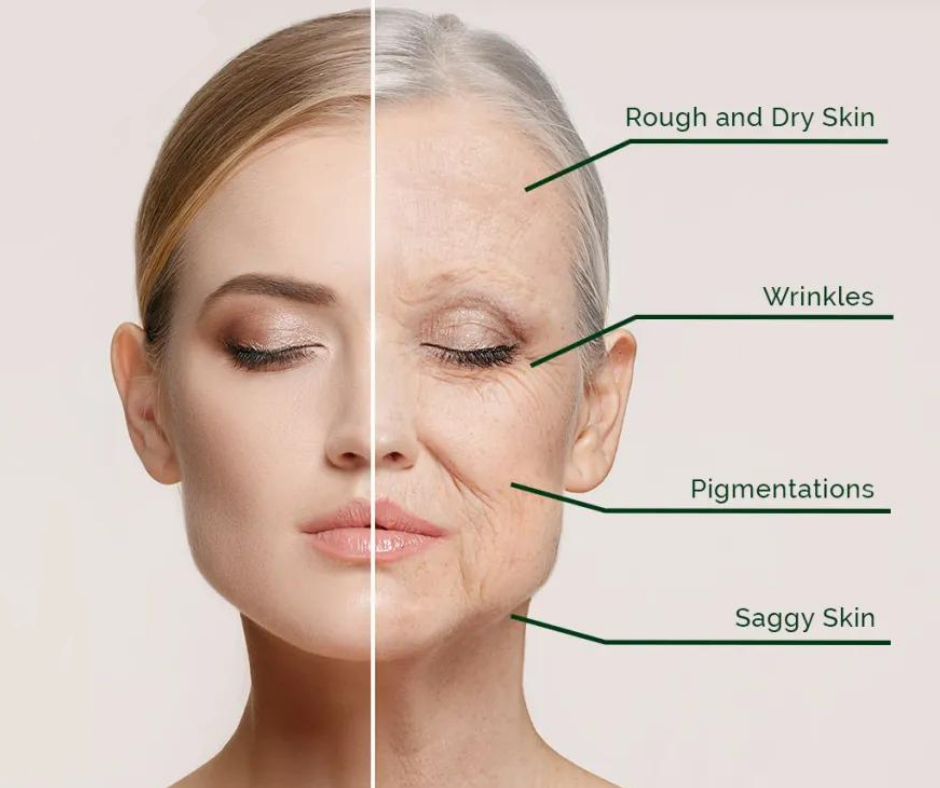
Fig. 1 Image depicting age‑related skin changes such as fine lines, wrinkles, and loss of elasticity. In Anti‑aging stem cell therapy.
Stem cell therapy is effective in improving skin texture
When fibroblast levels increase, they produce greater amounts of collagen, elastin, and hyaluronic acid, which can significantly improve skin texture. As we age, collagen and elastin levels naturally decline, contributing to common skin concerns such as age spots, fine lines, and enlarged pores.
By increasing the number of fibroblasts, stem cell therapy helps restore collagen and elastin production, potentially reducing these visible signs of aging and promoting a more youthful appearance.

Fig. 2 Diagram of increased fibroblast levels and skin elasticity [Illustration]. In Anti-aging stem cell therapy.
Stem cell therapy can prevent illnesses
Stem cell therapy may have preventive effects against certain illnesses by supporting the body’s natural repair mechanisms. Under normal conditions, cells can heal and regenerate themselves, but when aging or damage becomes too advanced, this ability declines and cellular damage may become irreversible. By repairing and regenerating compromised cells before disease manifests, stem cell therapy has the potential to help maintain overall health and delay the onset of illness.
Types of Stem Cell Therapy
Anti-Aging Stem Cell Therapy
This approach focuses on rejuvenating the skin and slowing age-related changes. Stem cells are used to stimulate fibroblasts, which produce collagen, elastin, and hyaluronic acid. By increasing these essential substances, the therapy can improve skin texture, reduce fine lines and wrinkles, and promote a more youthful appearance. Anti-aging stem cell therapy can also support overall cellular health, potentially delaying age-related deterioration.

Fig. 3 A visual representation of fibroblasts in the skin being stimulated, showing how nurturing these cells can boost collagen, elastin, and hyaluronic acid production for healthier, more youthful-looking skin. SVF (Stromal Vascular Fraction) Therapy SVF therapy involves isolating a group of cells from fat tissue, which contains stem cells along with other regenerative cells such as endothelial and immune cells. This mixture is rich in growth factors and has a high regenerative potential. SVF therapy is used for both medical purposes—such as treating joint injuries, osteoarthritis, and tissue damage—and cosmetic applications, including skin rejuvenation and facial volumization. Its strength lies in the combined action of multiple cell types, enhancing repair and regeneration.

Fig. 4 Cell population of the stromal-vascular fraction (SVF) and their percentage. Adapted from Gareev et al. Regenerative Medicine Using Stem Cells This broader category includes therapies designed to repair or replace damaged tissues and organs. Stem cells sourced from bone marrow, fat, or other tissues can differentiate into specific cell types—such as cartilage, nerve, or cardiac cells—to restore function in the affected area. Regenerative medicine is applied to treat conditions like chronic pain, heart failure, liver dysfunction, Parkinson’s disease, diabetes, and orthopedic injuries, alongside cosmetic and anti-aging uses.
Patient Selection for Optimal Anti-Aging Outcomes
Successful outcomes in stem cell therapy for skin rejuvenation and anti-aging depend heavily on careful patient selection. Each type of therapy—Anti-Aging Stem Cell Therapy, SVF Therapy, and Regenerative Medicine using stem cells—has unique characteristics that influence who is most likely to benefit.
Anti-Aging Stem Cell Therapy
Ideal candidates are generally adults showing early signs of skin aging, such as fine lines, loss of elasticity, and mild wrinkles. Patients with healthy fibroblast populations but declining activity are most responsive, as stem cell stimulation can restore collagen, elastin, and hyaluronic acid production efficiently. Those with severe photoaging, significant scarring, or chronic dermatologic conditions may require adjunctive therapies for optimal results.

Fig. 5 Illustration showing ideal candidates for stem cell therapy: adults with early signs of skin aging, such as fine lines, mild wrinkles, and reduced elasticity.
SVF (Stromal Vascular Fraction) Therapy
SVF therapy is best suited for patients seeking both cosmetic and regenerative benefits, such as improved skin volume, firmness, and texture. Candidates should have sufficient adipose tissue for cell extraction and be free from active infections or systemic inflammatory conditions. Because SVF contains multiple cell types, it may offer more robust tissue regeneration, making it suitable for patients with moderate to advanced skin laxity or volume loss.
Regenerative Medicine Using Stem Cells
While primarily applied to medical conditions, regenerative stem cell therapy can also benefit anti-aging outcomes in select patients. Ideal candidates include those with systemic conditions or tissue damage that indirectly accelerate skin aging, such as metabolic disorders, chronic inflammation, or impaired wound healing. Careful screening ensures that patients have adequate baseline health to support cellular engraftment and minimize adverse outcomes.

Fig. 6 Mechanism of homeostatic and reparative incapacitation in the aged hypodermis.
Key Considerations Across All Therapies.
Age, skin condition, and lifestyle factors (e.g., smoking, UV exposure) influence responsiveness.
Comorbidities and immunological status must be evaluated to reduce risks and maximize efficacy.
Realistic expectations and understanding of the therapy’s regenerative limits are essential for patient satisfaction.
Why this matters for Practitioners?
Understanding stem cell therapy, its types, and patient selection is essential for practitioners who want to integrate anti-aging treatments safely and effectively into their practice.
Evidence-Based Decision Making: Knowledge of the different therapy types and mechanisms allows practitioners to select the most appropriate treatment for each patient.
Optimized Outcomes: Proper patient selection ensures that therapies produce meaningful improvements in skin texture, elasticity, and overall youthfulness.
Risk Management: Awareness of contraindications, comorbidities, and limitations reduces the likelihood of complications or unsatisfactory results.
Professional Credibility: Staying informed about cutting-edge regenerative and anti-aging therapies positions practitioners as trusted experts in aesthetic medicine.
Patient Education: Understanding the science enables clear communication with patients about expected outcomes, timelines, and the role of stem cell therapy in a comprehensive anti-aging strategy.
Conclusion
Stem cell therapy represents a promising frontier in anti-aging and regenerative medicine. By understanding what stem cell therapy is, the different types available, and the importance of patient selection, practitioners can deliver treatments that are both safe and effective. Whether stimulating fibroblasts for youthful skin, using SVF for regenerative and volumizing effects, or applying broader regenerative approaches, careful clinical decision-making is key to achieving optimal outcomes.
For doctors and clinicians, staying informed about these therapies ensures they can offer evidence-based, tailored treatments that not only improve appearance but also support long-term tissue health—truly unlocking the potential of youthful, resilient skin.
Reference:
Author. (2024, May 9). How does stem cell therapy produce anti-aging effects? A simple introduction to the treatment methods. Updated June 6, 2024.
Source: https://azabu-stemcell.com/en/column/stem-cell-therapy-anti-aging/
Liu, M., Lu, F., & Feng, J. (Year). Aging and homeostasis of the hypodermis in the age-related deterioration of skin function. Source: https://www.nature.com/articles/s41419-024-06818-z
Gareev, I., Beylerli, O., Sufianov, A., Pavlov, V., & Shi, H. (Year). Stromal vascular fraction cell therapy: A promising therapeutic method for intracerebral hemorrhage.
Source: https://www.sciencedirect.com/science/article/pii/S2589238X25000154
Learn Anti Aging Stem Cell, SVF Therapy, and Regenerative Medicine techniques in our upcoming Mini Fellowship:
IFAAS Mini Fellowship (Hands-On)
Anti-Aging Stem Cell Therapy & Regenerative Medicine

Anti-Aging Stem Cell Theraphy & Regenerative Medicine - Seoul, South Korea - [Register Now]
Comments